
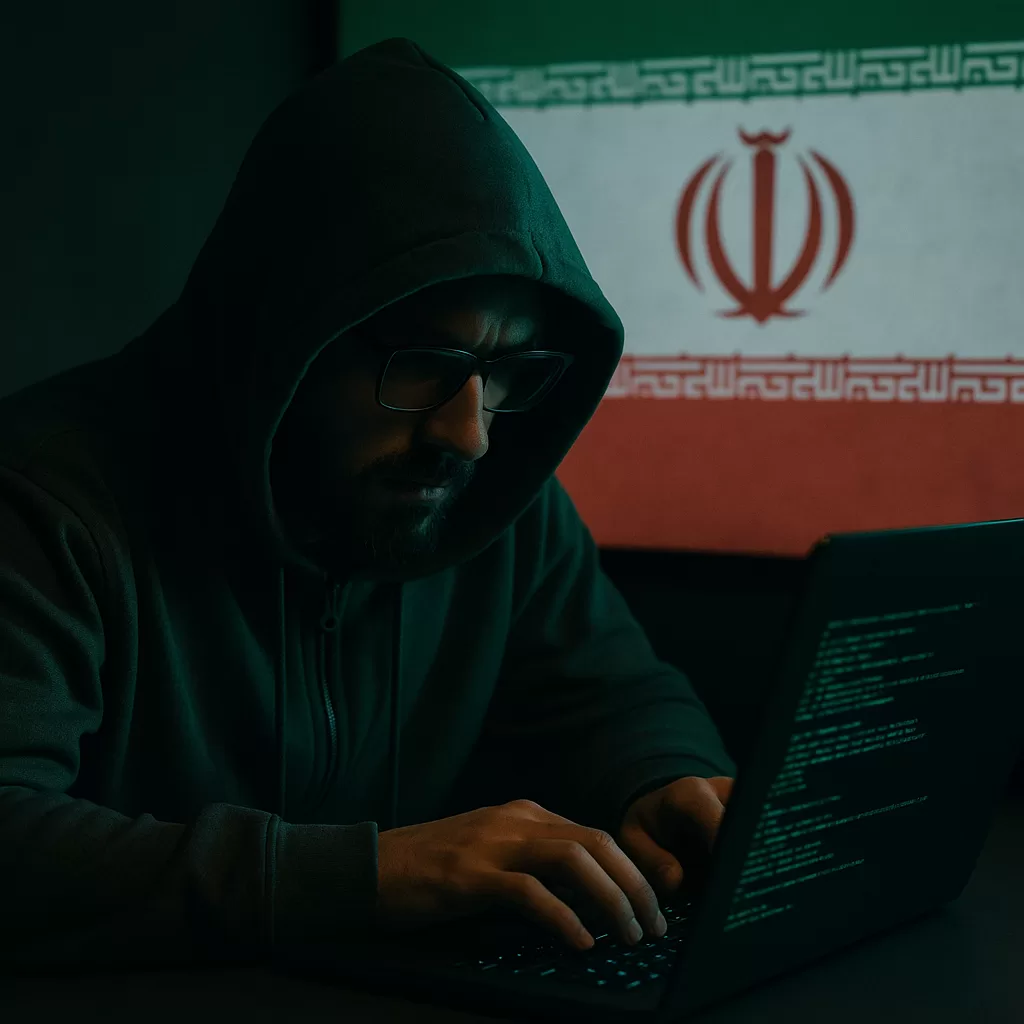
The U.S. Department of Homeland Security (DHS) has issued a significant cybersecurity alert, signaling an elevated threat from pro‑Iranian hacktivist groups and Iran‑affiliated cyber actors targeting American critical infrastructure and poorly secured networks in the aftermath of recent military strikes on Iranian nuclear facilities
Heightened Threat Environment
The advisory, released amidst rising tensions stemming from U.S. airstrikes on three Iranian nuclear sites—Fordo, Natanz, and a third undisclosed location—warns of a “heightened threat environment.” DHS stresses that both “low-level cyber attacks” by hacktivists and more sophisticated operations by governmental cyber teams in Iran are “likely” .
These warnings reflect DHS’s assessment that groups propelled by nationalist fervor—whether ideologically motivated small collectives or more organized state-sponsored teams—will seize the opportunity to exploit the current climate.
Scope and Nature of Potential Attacks
According to DHS, poorly secured U.S. systems and internet-of-things (IoT) devices remain prime targets, ideal for enabling disruptive activities. The bulletin emphasizes that even minor attacks, such as distributed denial-of-service (DDoS) assaults, malware distribution, or infrastructure probing, can play significant roles in broader campaigns aimed at sowing uncertainty, inflicting operational disruptions, and gathering intelligence .
“This is not a theoretical concern—these actors have already demonstrated routine targeting of vulnerable U.S. networks and devices,” DHS warned. “The potential for hit-and-run tactics or probing actions to create disruption—or serve as a precursor for larger operations—has increased dramatically.”
Context: Geopolitics and Cyber Espionage
The DHS advisory follows a larger geopolitical shift that began on June 13, when escalating violence in the ongoing Iran–Israel war saw the U.S. conduct targeted air strikes on Iranian nuclear sites. This surge in kinetic conflict on the ground has translated to cyberspace, where even loosely affiliated hacktivists, inspired by recent developments, can rapidly mobilize.
Notably, experts point to the blurred lines between non-state “hacktivist” groups and formal Iranian cyber forces. In some instances, hacktivist activity could act as cover for discreet state-sponsored campaigns, and vice versa—creating an effective tension behind what appears to be sporadic hacking .
DHS and CISA’s Joint Call to Action
Echoing ongoing efforts by the DHS’s Cybersecurity and Infrastructure Security Agency (CISA), the bulletin urges organizations—especially those managing critical infrastructure like energy, water, transportation, finance, healthcare, and telecommunications—to adopt proactive cybersecurity protocols.
Recommended measures include:
- Patch and update network and internet-facing systems, including routers, IoT devices, industrial control systems (ICS), and SCADA infrastructure.
- Segment networks to isolate critical systems and reduce lateral movement in case of a breach.
- Monitor logs and traffic, with particular attention to spikes, anomalous connections, and unauthorized scans.
- Strengthen identity protections, deploy multi-factor authentication, and enforce sharp access controls.
- Engage in cyber threat intelligence sharing, enabling detection and faster response to coordinated or sustained attacks.
Looking Beyond “Low‑Level” Disruption
While many anticipated threats may manifest as small-scale intrusions—such as scanning, DDoS, or ransomware—DHS cautions against dismissing these as merely nuisance-level. Collective ‘low‑level’ disruptions, especially during geopolitical tensions, can amplify in impact and set the stage for more disruptive campaigns later.
Former cyber officials note that reconnaissance or probing attacks can signal scanning for vulnerabilities in critical systems—a precursor to damaging intrusions targeting ICS or SCADA infrastructure.
Given Iran’s past cyber activities—such as Stuxnet (widely believed to have targeted its nuclear program in 2010) and more recent regional operations—U.S. cybersecurity strategists expect future attacks to adopt greater sophistication and stealth en.wikipedia.orgen.wikipedia.org.
What Organizations and Individuals Should Do Now
- Keep software and firmware current – Regularly update all network-facing devices and ensure security patches are promptly applied.
- Optimize network architecture – Isolate critical services, restrict unnecessary inbound/outbound connections, and implement least-privilege access.
- Increase monitoring diligence – Centralize and review security logs, with tuned alerts for sudden traffic changes or atypical access patterns.
- Practice incident response drills – Ensure plans are tested regularly, with simulated attack scenarios involving non-traditional vectors like DDoS or ICS targeting.
- Engage with peers – Participate in CISA’s information sharing networks and local cyber incident response organizations, improving readiness and situational awareness.
Final Word
As kinetic conflicts expand into cyberspace, DHS emphasizes the need for vigilance. “The increased intensity of regional warfare has created a cyber flashpoint that U.S. organizations cannot ignore,” officials stated. “Disregarding seemingly small-scale hacks now could lead to catastrophic disruptions later.”
With pro-Iranian hacktivists emboldened and Iranian state cyberforces likely conducting surveillance or probing, U.S. defenders are bracing for multifaceted digital threats. Preparedness, intelligence sharing, and persistent defense will be key to safeguarding American networks and critical systems amid this evolving digital battlefield.
Please subscribe to the Newsletter so that you do not miss any critical update