
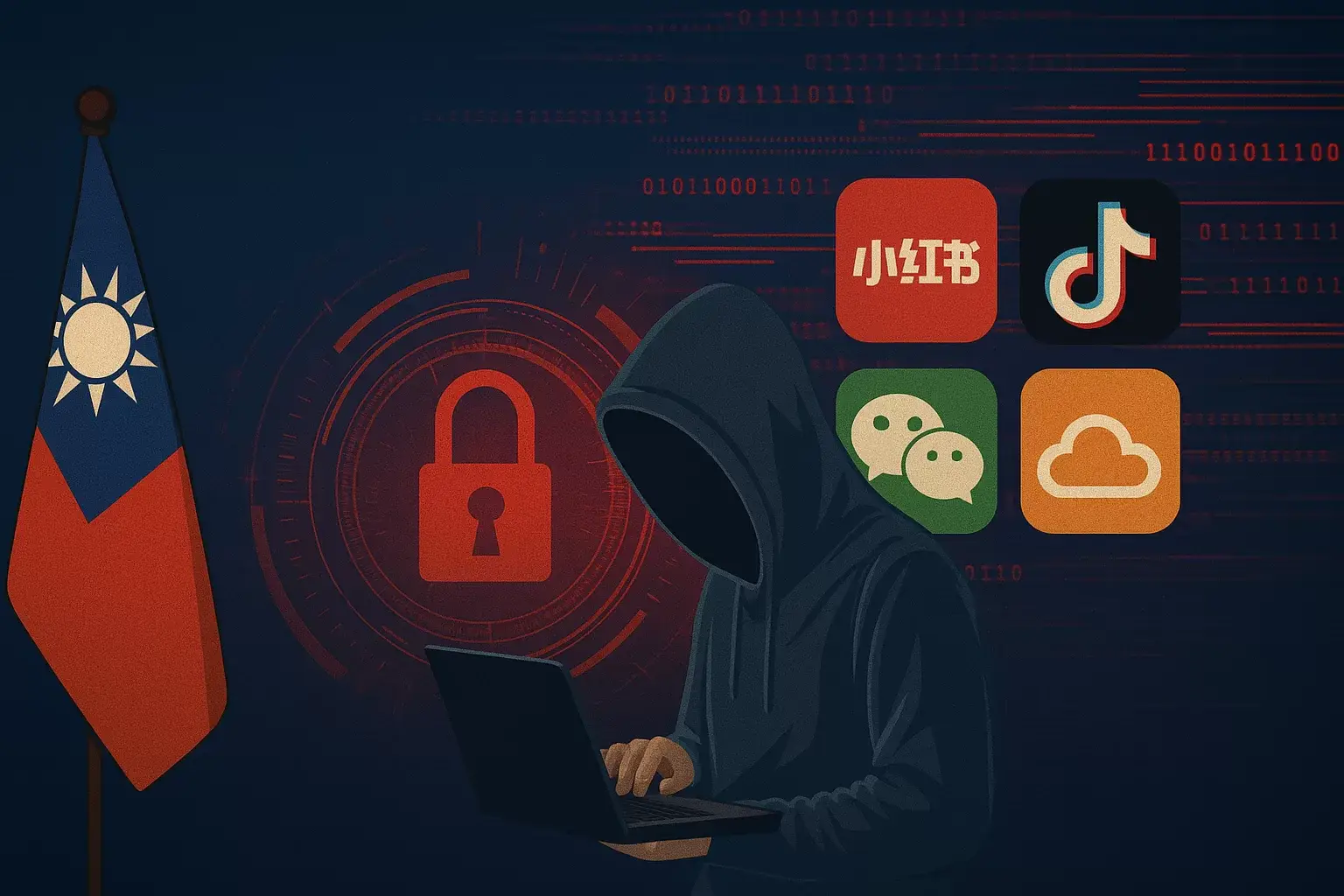
The National Security Bureau (NSB) of Taiwan has issued a stern warning about the data-security threats posed by popular Chinese-developed mobile apps—including RedNote (Xiaohongshu), Weibo, TikTok, WeChat, and Baidu Cloud—advising citizens to exercise caution before installing or using them.
In collaboration with the Ministry of Justice Investigation Bureau (MJIB) and the Criminal Investigation Bureau (CIB) under the National Police Agency, the NSB conducted a thorough security inspection of these apps, evaluating them across 15 critical indicators spanning five key categories: personal data collection, excessive permissions, data transmission/sharing, system information retrieval, and biometric data access.
Key Findings: Overcollection and Privacy Breaches
The evaluation revealed alarming lapses:
- RedNote failed on all 15 indicators, ranking worst among the tested apps.
- Weibo and TikTok each breached 13 indicators.
- WeChat violated 10, and Baidu Cloud fell short on nine.
Officials highlighted troubling patterns including:
- Excessive personal data harvesting: Apps collected facial-recognition information, clipboard contents, contact lists, and precise location data.
- System and device fingerprinting: Installed app lists and hardware identifiers were captured.
- Data transmission back to China: All five apps were found relaying data packets to servers in mainland China.
These behaviors raise serious national-security concerns in light of Chinese legal obligations requiring domestic firms to surrender user data upon request for national or state-security reasons.
Legal Context and Geopolitical Pressures
Under Chinese law, companies like ByteDance (TikTok), Tencent (WeChat), Sina (Weibo), and others are compelled to provide access to user data to government agencies for intelligence or public-security purposes. The NSB cautioned that usage of such apps by Taiwanese users risks inadvertent data exposure to China.
This alert arrives amid a global wave of scrutiny concerning Chinese apps. India banned numerous Chinese apps citing security and privacy issues. Canada mandated the dissolution of TikTok operations in November 2024, and the U.S. is deliberating a potential ban—currently postponed into 2025 . Last week, a German data protection authority urged both Apple and Google to remove the Chinese AI chatbot DeepSeek from their app stores, citing unlawful data transfers.
Official Recommendations and Broader Implications
The NSB urged the public to steer clear of “China‑made apps that pose cybersecurity risks,” recommending users maintain vigilance regarding mobile‑device security to safeguard personal privacy and corporate data secrets.
Practical Impact on Users and Businesses
- For individual users: Taiwan’s findings suggest a reevaluation of Chinese app use. Apps like TikTok and WeChat—which are deeply embedded in daily routines—may need alternatives with stronger privacy protection.
- For businesses and public sector: Government agencies and enterprises are expected to reassess mobile app policies, possibly limiting or banning apps deemed high-risk. This move aligns with Taiwan’s broader push to reinforce national cybersecurity posture.
- For regional data-security strategies: Taiwan’s action strengthens its alignment with countries like India, Canada, and Germany. It underscores a rising trend where democracies scrutinize data access routes via foreign-developed applications, especially those with origins in strategic rival states.
What Lies Ahead
Taiwan’s cautionary alert signals a new phase in public awareness campaigns around mobile-app privacy and national security. Likely developments may include:
- Consumer education campaigns: Government agencies in Taiwan—perhaps including the NSB or Digital Minister—might soon launch outreach programs to inform citizens about app-specific risks.
- Regulatory interventions: Taiwan may explore new legislation mandating stricter data privacy or requiring app-source risk disclosures.
- Corporate compliance measures: Multinational and Taiwan-based companies could be compelled to implement stricter guidelines for staff, advising against the use of flagged apps on work devices.
- International collaboration: Taiwan may join forces with like‑minded democracies to share threat intelligence and harmonize standards around data-handling practices of foreign-origin apps.
Conclusion
Taiwan’s NSB alert comes amid a growing global chorus of concern over Chinese-developed applications and their potential to leak personal or corporate data to authoritarian governments. With RedNote, TikTok, Weibo, WeChat, and Baidu Cloud all flagged, Taiwanese users and businesses are urged to reassess digital habits. The NSB’s stringent findings and public recommendations mark a pivotal step in Taiwan’s national cybersecurity strategy—and part of a broader democratic response worldwide.
Please subscribe to the Newsletter so that you do not miss any critical update